Salivary Gland Tumor
Understanding Salivary Glands
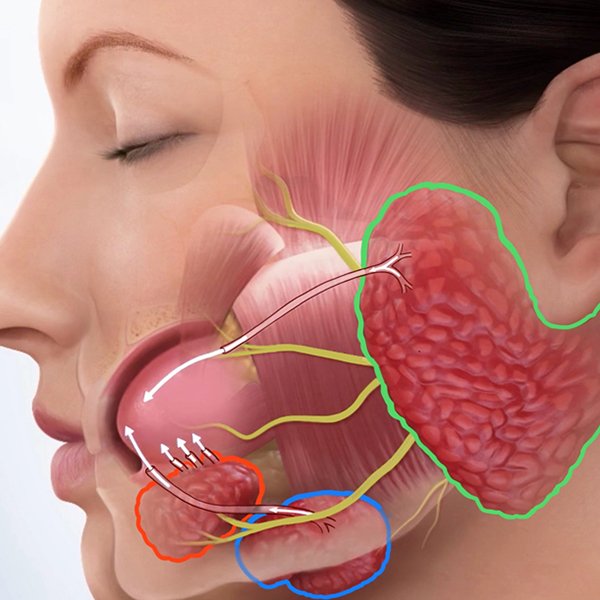
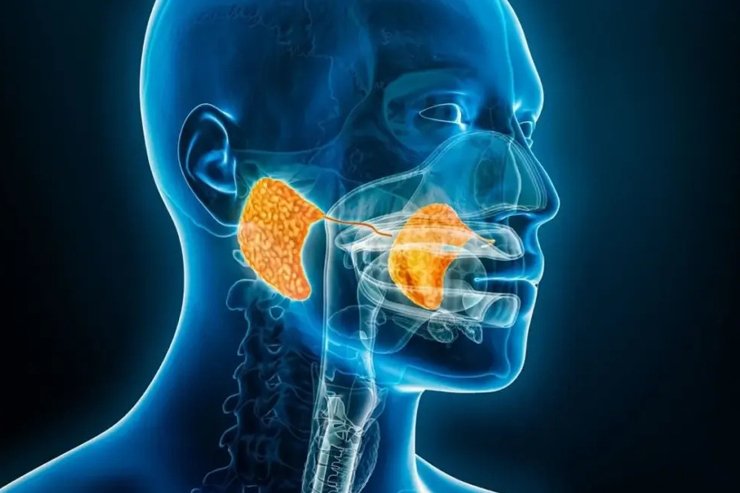
Your body has major and minor salivary glands responsible for keeping the
mouth moist, aiding digestion, and protecting oral tissues:
- Major Glands: Located in the head and neck. These include the parotid glands
(in front of the ears), submandibular glands (under the jaw), and sublingual
glands (under the tongue). - Minor Glands: Tiny, numerous glands scattered throughout the lining of your
mouth and throat.
Types of Tumors
Benign Tumors
Approximately 80% of salivary gland tumors are noncancerous. They are typically slow-growing, localized, and almost always
cured with surgical removal.
Malignant (Cancerous) Tumors
These are less common, but they can
aggressively grow into nearby healthy tissue or spread to other parts of the body. Common types include mucoepidermoid carcinoma and adenoid cystic
carcinoma.
Diagnosis and Treatment
-
Surgical Excision
Removing the tumor along with a margin of healthy tissue or the entire affected gland.
-
Neck Dissection
If the tumor is malignant, removing nearby lymph nodes may be required.
-
Reconstructive Surgery
Repairing nerves, bone, or skin to restore facial function and appearance.
-
Radiation Therapy or Chemotherapy
Often recommended for malignant tumors to destroy any remaining cancer cells.